Your baby has had their newborn check and their 6 to 8 week check. You’ve been told everything looks fine. And yet you’re left thinking, “What now?”
Perhaps you’ve raised something and been told it’s “just normal baby development”. Perhaps you’ve read so much online that you no longer know what normal looks like. As their parent, something still doesn’t sit quite right with you.
That feeling deserves to be heard. That’s what a developmental check at our Children’s Clinic in Gravesend is for: time to listen first, then a thorough, gentle look at how your little one is moving and developing.
What checks does the NHS already do?
In England, every baby is offered a set of routine checks (NHS):
-
a full physical examination within 72 hours of birth
-
a new baby review with a health visitor at 10 to 14 days
-
a second physical examination, usually with your GP, at 6 to 8 weeks
-
further development reviews with your health visitor, up to around age 2
These checks matter, and a developmental check with me doesn’t replace any of them. What I can offer is time. If you have a specific worry that you’d like explored in more depth, we can do that together.
Why parents come to see me
In my experience, parents usually come to me for three reasons. They’re not sure whether what their baby is doing is “normal”. They want reassurance from someone who has examined their baby properly. And they want someone to take the time to listen before anyone starts assessing.
Research backs this up. A review of 58 studies of first-time parents found that they needed reassurance about what was normal, wanted enough time with professionals, and were often confused by conflicting advice (Research in Nursing and Health, 2023).
The good news is that, in my experience, the large majority of babies I see are developing well and as expected. Even so, parents tell me it helps to have their concern taken seriously and checked properly.
What happens at a developmental check?
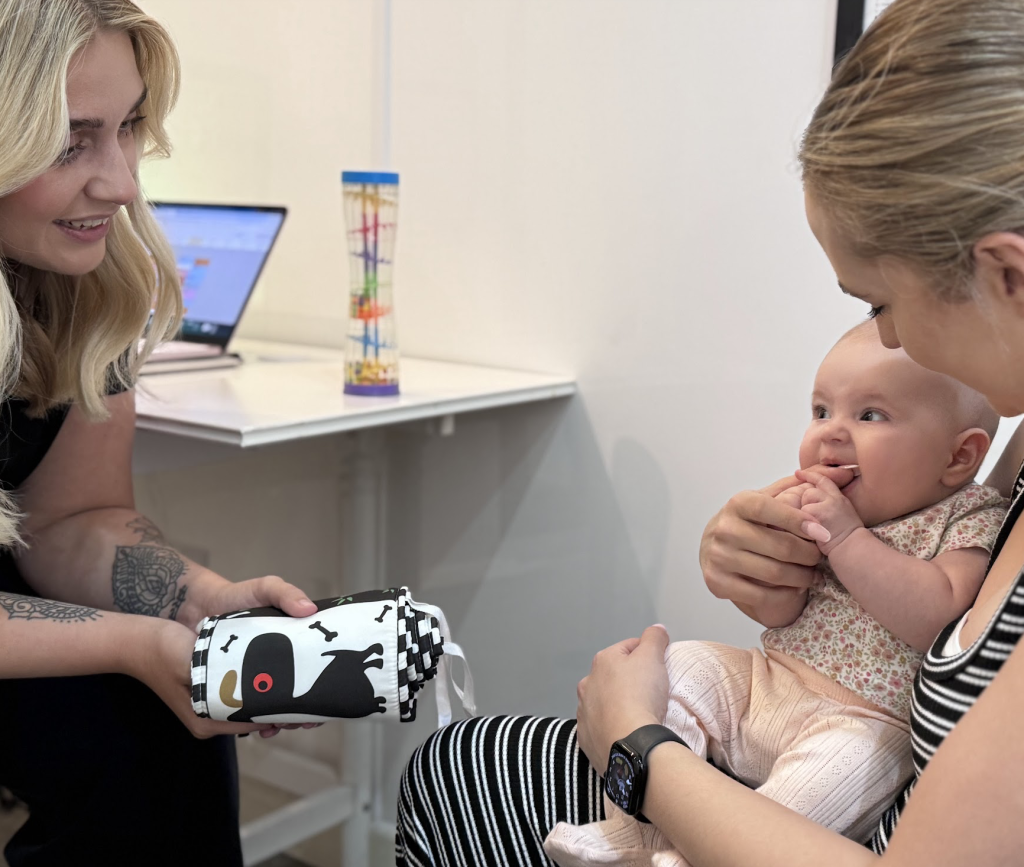
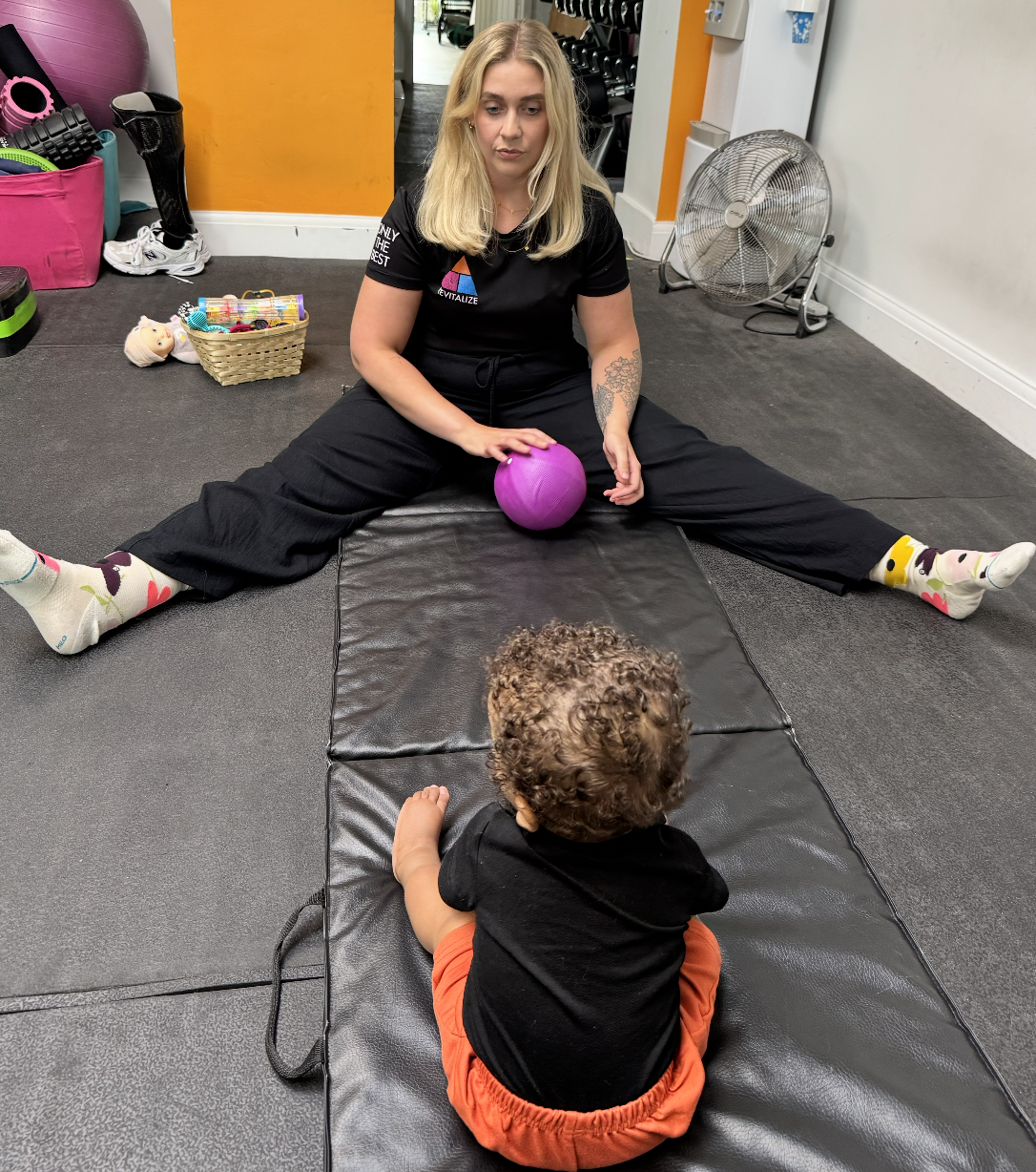
Your first appointment lasts an hour. That gives us plenty of time to talk through what’s really worrying you before I examine your baby, and then to focus on that area.
Corrected age. If your baby arrived early, I’ll work from their corrected age: their age counted from their due date, not their birth date. A study of over 700,000 children found that once age was corrected, most babies born moderately or slightly early had caught up with their milestones. Babies born very early could still be one to two months behind, which is expected (Pediatric Research, 2024). Knowing this can take a lot of worry away.
How your baby moves. In a newborn, I’m looking at how alert your baby is and whether they move all four limbs. Young babies haven’t yet developed slow, controlled movements, so at this stage I’m simply looking for movement in both arms and both legs. I’ll also listen to their cry. A strong cry is one of the things NHS newborn examiners look for too (Milton Keynes University Hospital).
Newborn reflexes. Babies are born with reflexes, automatic movements that fade over the first few months as more controlled movement takes over. These include sucking, grasping and the startle reflex (Derbyshire Family Health Service). How these reflexes appear, and whether they’re the same on both sides, helps tell us whether something might need a closer look (Norfolk and Norwich University Hospitals). I’ve completed additional paediatric training to assess these, and I’d encourage any parent to check that whoever examines their baby has too.
What about older children?
For older children, I use an assessment called pGALS, which stands for paediatric Gait, Arms, Legs and Spine. It’s a simple head-to-toe check of how your child walks, runs and moves each of their joints.
pGALS was developed by UK paediatric rheumatology specialists and tested in children aged 5 to 17. It picked up joint problems with 97 to 100% accuracy and took about 2 minutes to complete (Arthritis and Rheumatism, 2006). Arthritis UK describes it as the only evidence-based approach to a joint examination in children, and notes that younger children can do it too (Arthritis UK). It’s also used in NICE’s clinical knowledge summary for doctors (Rheumatology Advances in Practice, 2024).
pGALS doesn’t diagnose a condition on its own. It tells me whether something isn’t moving as it should, and whether we need to look further.
What happens next?
If I think your child needs a referral, I’ll tell you clearly and point you to the right person, usually a paediatrician or your GP. Knowing when something is outside my scope is part of doing this job well. You are never just a number to us.
If it’s something I can help with, we’ll agree a plan together. Depending on your child’s age and needs, that might include gentle hands-on treatment, exercise sessions in our private gym for older children, and advice you can use at home.
What can I notice at home?
You’re probably noticing your baby’s reflexes already without realising it:
-
The grasp reflex: when your baby grips your finger tightly.
-
The startle reflex: when a loud noise makes your baby fling out their arms and legs, then bring them back in.
-
The sucking and rooting reflexes: when you stroke your baby’s cheek and they turn towards it with their mouth open, ready to feed. If your baby is feeding well, that’s already a good sign. If feeding is hard work, you might find my article on tongue tie and feeding helpful.
When to call your GP or health visitor first
Some things shouldn’t wait for an appointment with me. Contact your GP or health visitor, or call 111, if your baby is not feeding well, is too tired to feed, or seems unusually quiet, drowsy or floppy (NHS England NIPE Programme Handbook). The same applies if they seem to have lost a skill they already had.
The key points
-
NHS checks are essential, and a developmental check with me doesn’t replace them. It gives you more time to explore a specific worry.
-
In babies, I check movement, reflexes and alertness, always using their corrected age if they arrived early.
-
In older children, I use pGALS, an evidence-based movement check, and refer on whenever something is outside my scope.
Baby developmental check in Gravesend, Kent
If there’s something about your little one that’s on your mind, no concern is too small to talk through. I see babies and children at the Children’s Clinic at Revitalize, 168 Windmill Street, Gravesend. Families come from across Kent, including Northfleet, Dartford, Swanscombe and Meopham.
Book a free telephone consultation. No commitment, just a proper conversation about what’s going on for you and your baby.
References
-
NHS. Your baby’s health and development reviews. https://www.nhs.uk/baby/babys-development/height-weight-and-reviews/baby-reviews/
-
Saether KM, Berg RC, Fagerlund BH, Glavin K, Jøranson N. First-time parents’ experiences related to parental self-efficacy: a scoping review. Research in Nursing and Health, 2023. https://doi.org/10.1002/nur.22285
-
Goldshtein I, Amit G, Avgil Tsadok M, et al. Age-corrected development of preterm children: a population-based study. Pediatric Research, 2024. https://doi.org/10.1038/s41390-024-03449-0
-
Milton Keynes University Hospital. Examination of the newborn guideline. https://www.mkuh.nhs.uk/wp-content/uploads/2022/10/Examination-of-the-Newborn-.pdf
-
Derbyshire Family Health Service (NHS). Normal baby behaviour 0 to 6 months. https://www.derbyshirefamilyhealthservice.nhs.uk/our-services/0-5-years/development-0-6-months/normal-baby-behaviour-0-6-month
-
Norfolk and Norwich University Hospitals. Trust guideline for the newborn and infant physical examination. https://www.nnuh.nhs.uk/publication/download/newborn-and-infant-physical-examination-nipe-ca4069-v6/
-
Foster HE, Kay LJ, Friswell M, Coady D, Myers A. Musculoskeletal screening examination (pGALS) for school-age children based on the adult GALS screen. Arthritis and Rheumatism, 2006. https://doi.org/10.1002/art.22230
-
Arthritis UK. Musculoskeletal assessment: pGALS questions and examination. https://www.arthritis-uk.org/health-and-care-professionals/training-and-professional-development/musculoskeletal-clinical-assessment-in-children-and-young-people/musculoskeletal-assessment-pgals-questions-and-examination/
-
Beyond pGALS: the need for a multifaceted musculoskeletal decision-making tool (“pGALSplus”) in community-based clinical practice. Rheumatology Advances in Practice, 2024. https://pmc.ncbi.nlm.nih.gov/articles/PMC10822673/
-
Mercer V, Smith N, Guglieri M, et al. The development of pGALSplus. Rheumatology Advances in Practice, 2024. https://doi.org/10.1093/rap/rkae089
-
NHS England. Newborn and infant physical examination (NIPE) screening programme handbook. https://www.gov.uk/government/publications/newborn-and-infant-physical-examination-programme-handbook/newborn-and-infant-physical-examination-screening-programme-handbook

Katie is registered with Vitality and WPA.
Katie Avery (M.Ost) (Lv. 3 Dip)
Registered Osteopath | Baby and Children Specialist Osteopath
Serving Gravesend, Dartford and Medway
Katie Avery is a Registered Osteopath at Revitalize Clinic in Gravesend and Clinical Lead for the Children and Baby’s Clinic. She provides osteopathic assessment and care for adults, babies and children, using a calm, individualised and family-centred approach.
Katie graduated with a Master of Osteopathy from the European School of Osteopathy in 2022 and has completed postgraduate training in specialist paediatric osteopathic practice. As an osteopath in Gravesend, she aims to help patients and families understand their options, agree appropriate next steps and work towards goals that matter to them.
Osteopathic care for adults, babies and children in Gravesend
Katie works with adults experiencing musculoskeletal pain, injury and movement-related difficulties, as well as babies and children with individual musculoskeletal, movement and comfort concerns. Each appointment considers the person’s relevant health history, symptoms, developmental stage where applicable, activity demands and personal goals.
Her interest in movement and rehabilitation is informed by her own background in CrossFit, Olympic lifting, aerial hoop and regular strength training. Katie also brings personal insight into longer-term recovery following a serious ankle injury that required multiple operations and an extended period on crutches.
Osteopathic care for babies and children
Parents may seek an osteopathic assessment with Katie for a baby or child with musculoskeletal and movement concerns, including positional preference, head-shape concerns, comfort and settling difficulties, feeding or positioning challenges, and concerns following a difficult or assisted birth.
Where a baby or child has a diagnosed medical condition, including tongue-tie, reflux or cleft lip and/or palate, osteopathic care is offered alongside—not instead of—assessment, advice and treatment from the appropriate healthcare or specialist team. Depending on the concern, this may include a GP, health visitor, midwife, paediatric clinician, feeding specialist, speech and language therapist, or cleft team.
Katie also has experience supporting children and families where a child has a complex neurological, developmental or health diagnosis, including cerebral palsy, functional neurological disorder (FND), autism and global developmental delay. Any osteopathic care is tailored to the child’s individual musculoskeletal presentation and is provided as part of an appropriate wider care plan. It does not replace medical, paediatric, therapy, educational or specialist support.
Important information for parents and carers
Osteopathic care is not a substitute for medical assessment, diagnosis or treatment. If your baby or child is unwell, has breathing difficulties, fever, persistent vomiting, dehydration, seizures, poor feeding, reduced wet nappies, unusual drowsiness, a significant injury, rapidly worsening symptoms, or anything that concerns you, seek appropriate urgent medical advice. You can contact NHS 111, your GP, health visitor, midwife or emergency services as appropriate.
If you are looking for an osteopath in Gravesend for yourself, your baby or your child, you can book an appointment with Katie at Revitalize Clinic or arrange a free telephone consultation to discuss whether an appointment may be suitable.